

Here you'll find the full Nordisk sleeping bag collection — six down models and four fibre models, a total of 35 variations, from ultralight summer bags to technical winter expedition sleeping bags.
Designed in Denmark and made at our own facility in Görlitz, Germany, every stitch, baffle and zip is developed with one purpose: to give you a sleeping bag you can depend on, season after season.
Down has been part of Nordisk's DNA for over a century. That is not a promise — it is a craft.

Filters
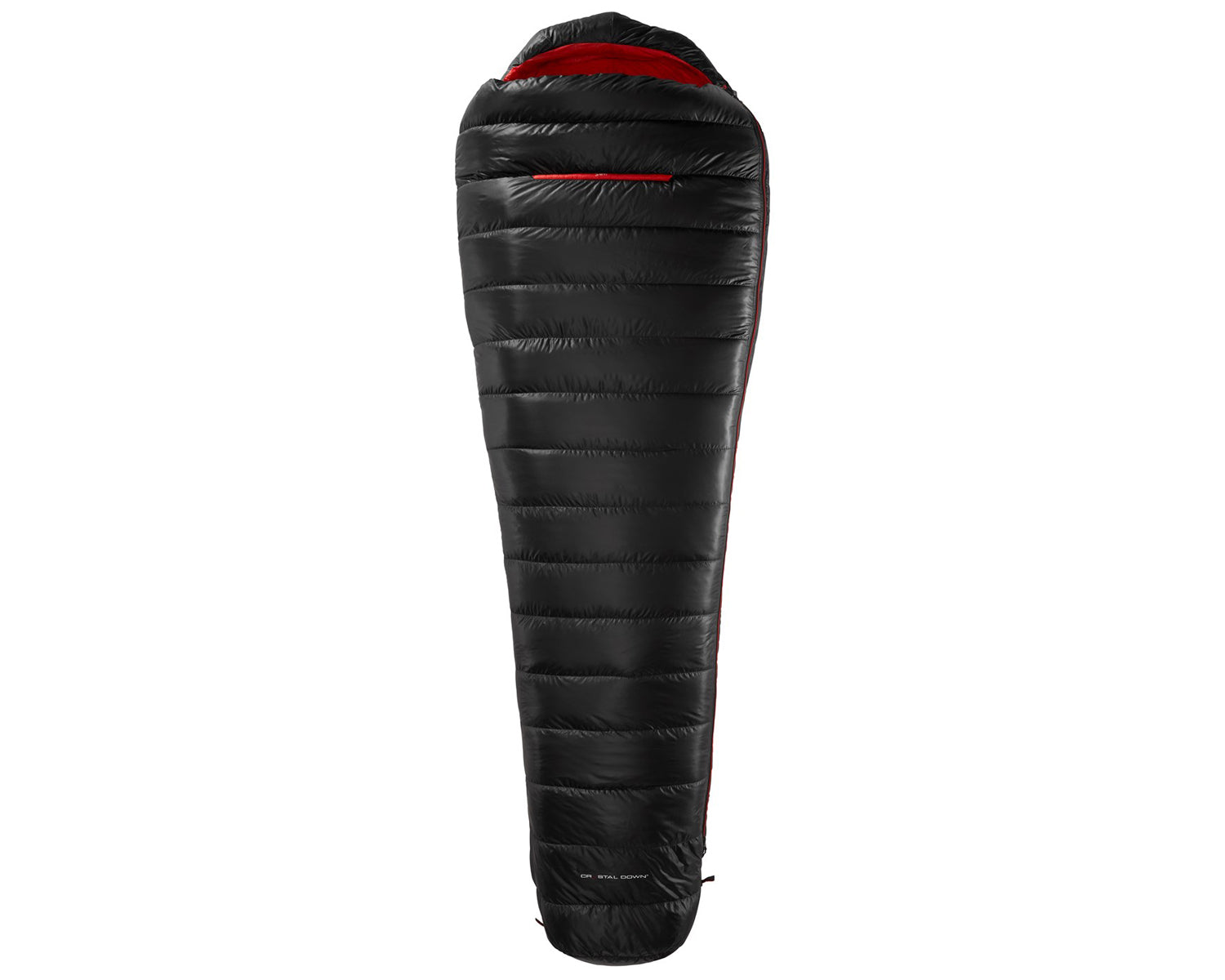
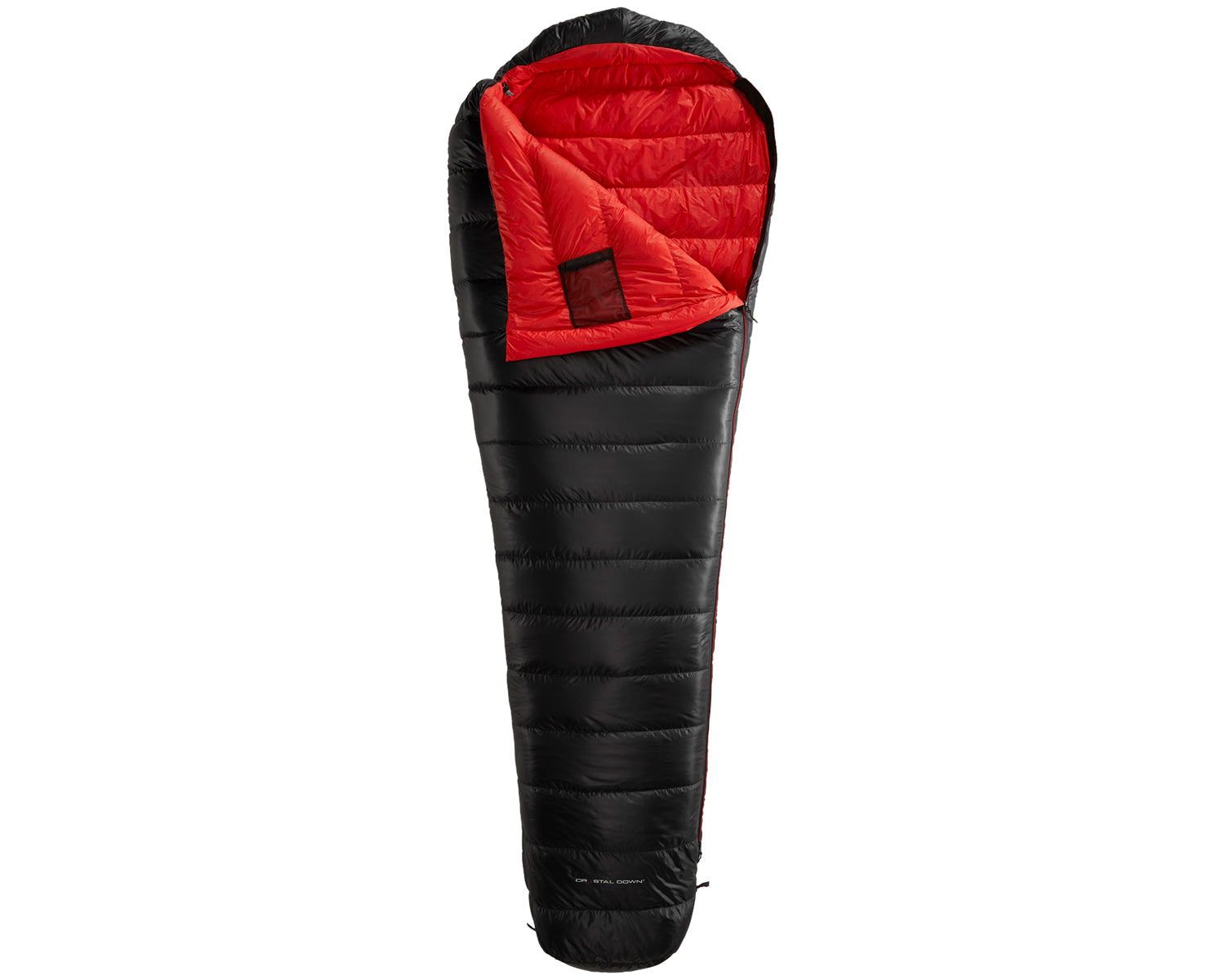
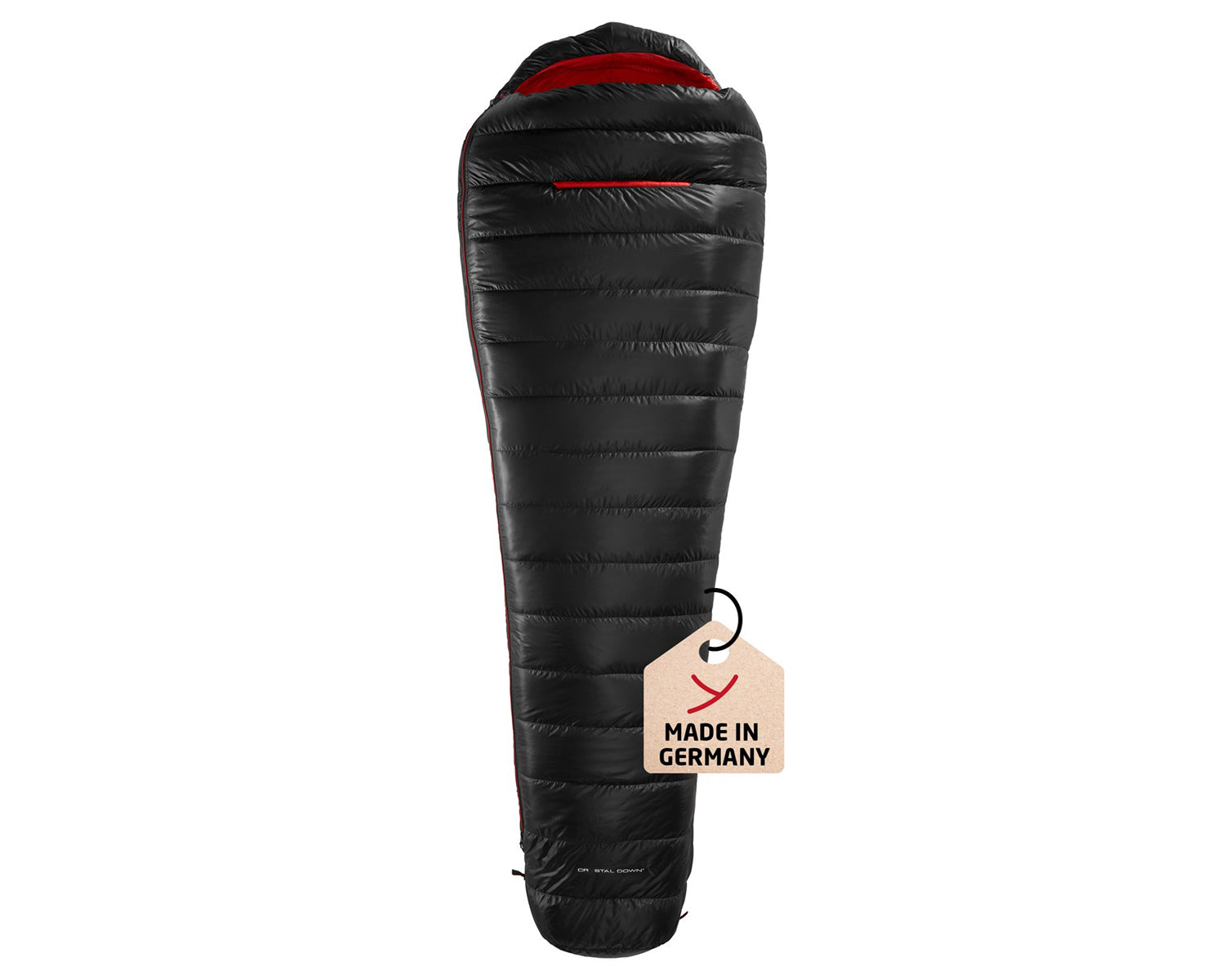

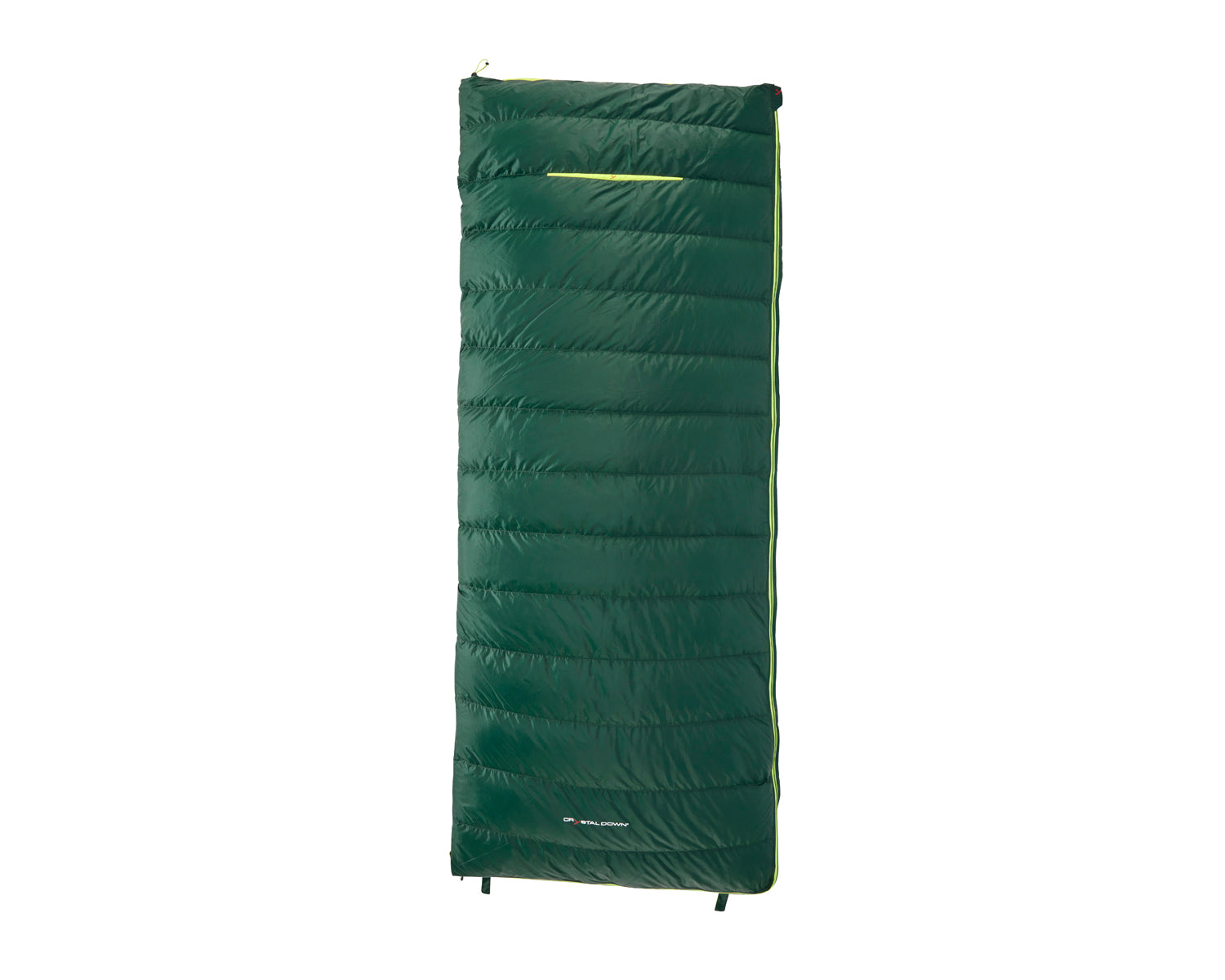
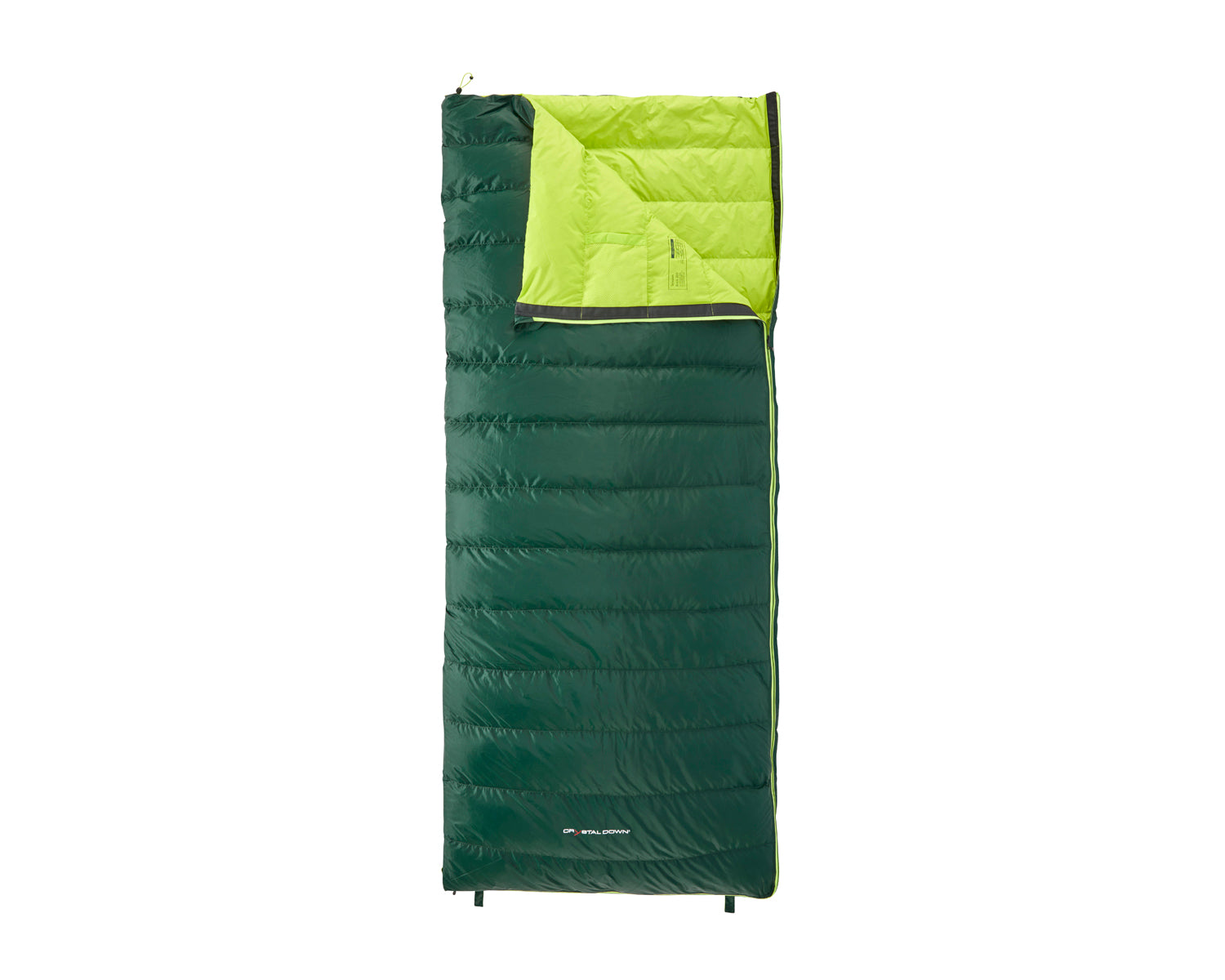
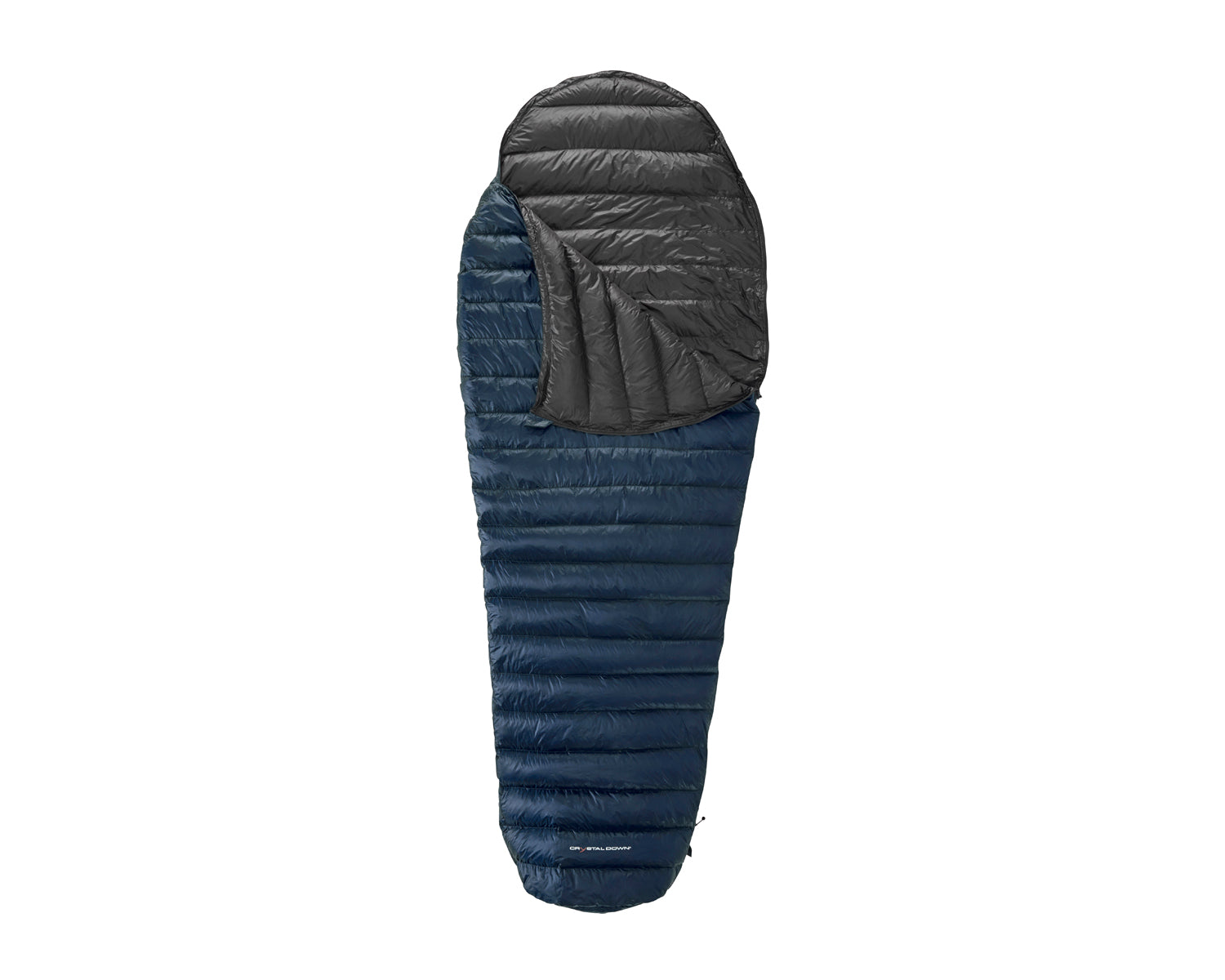
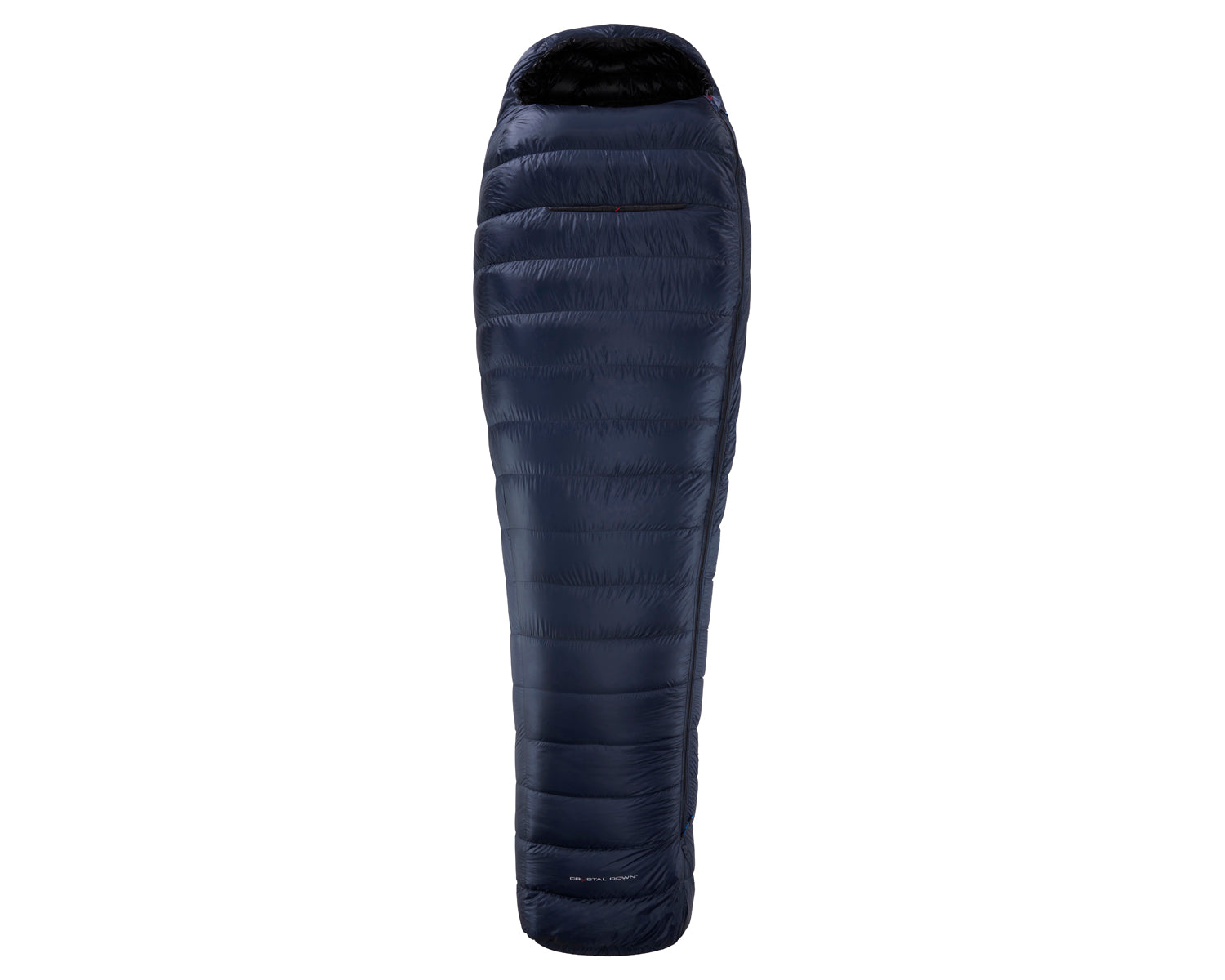
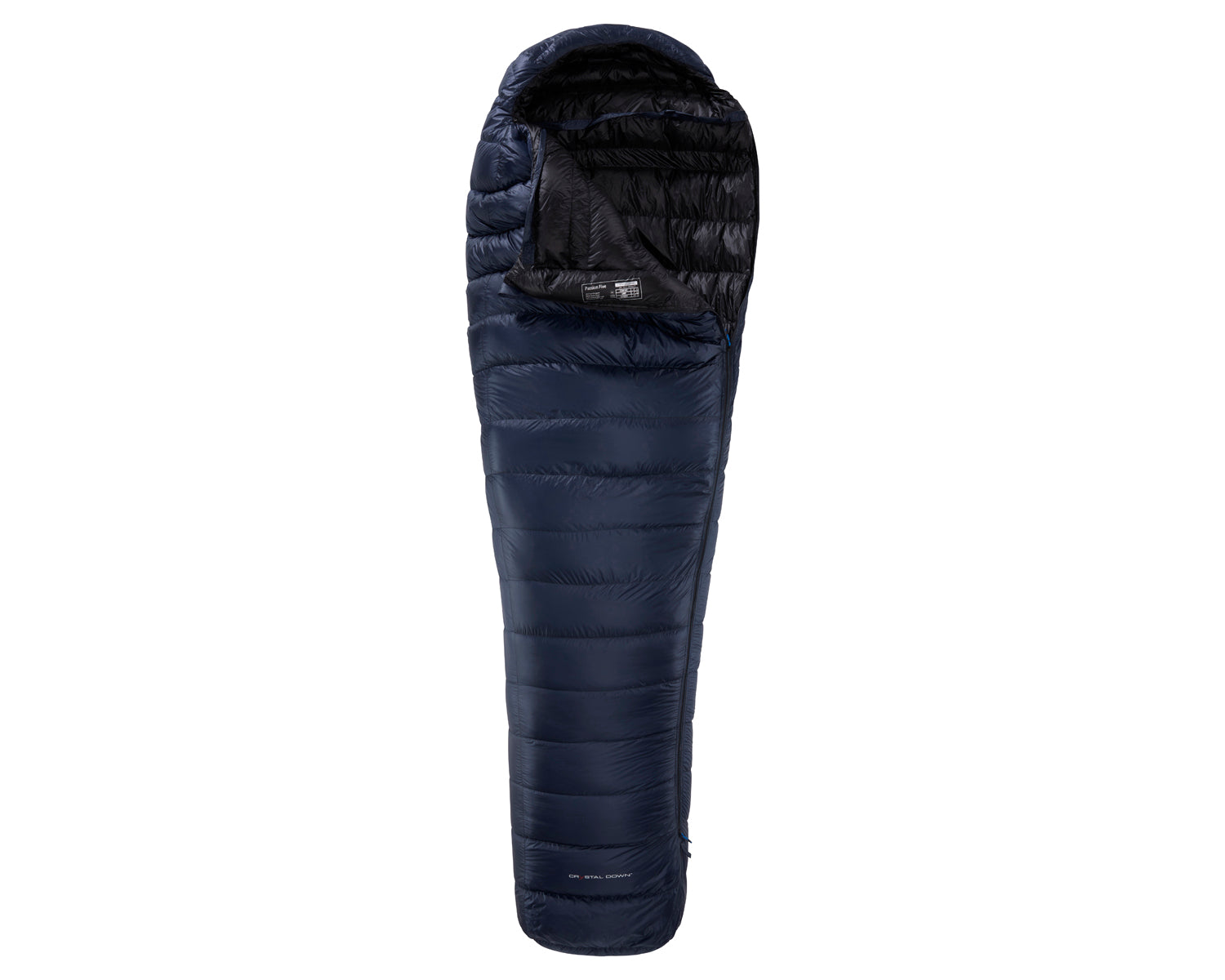
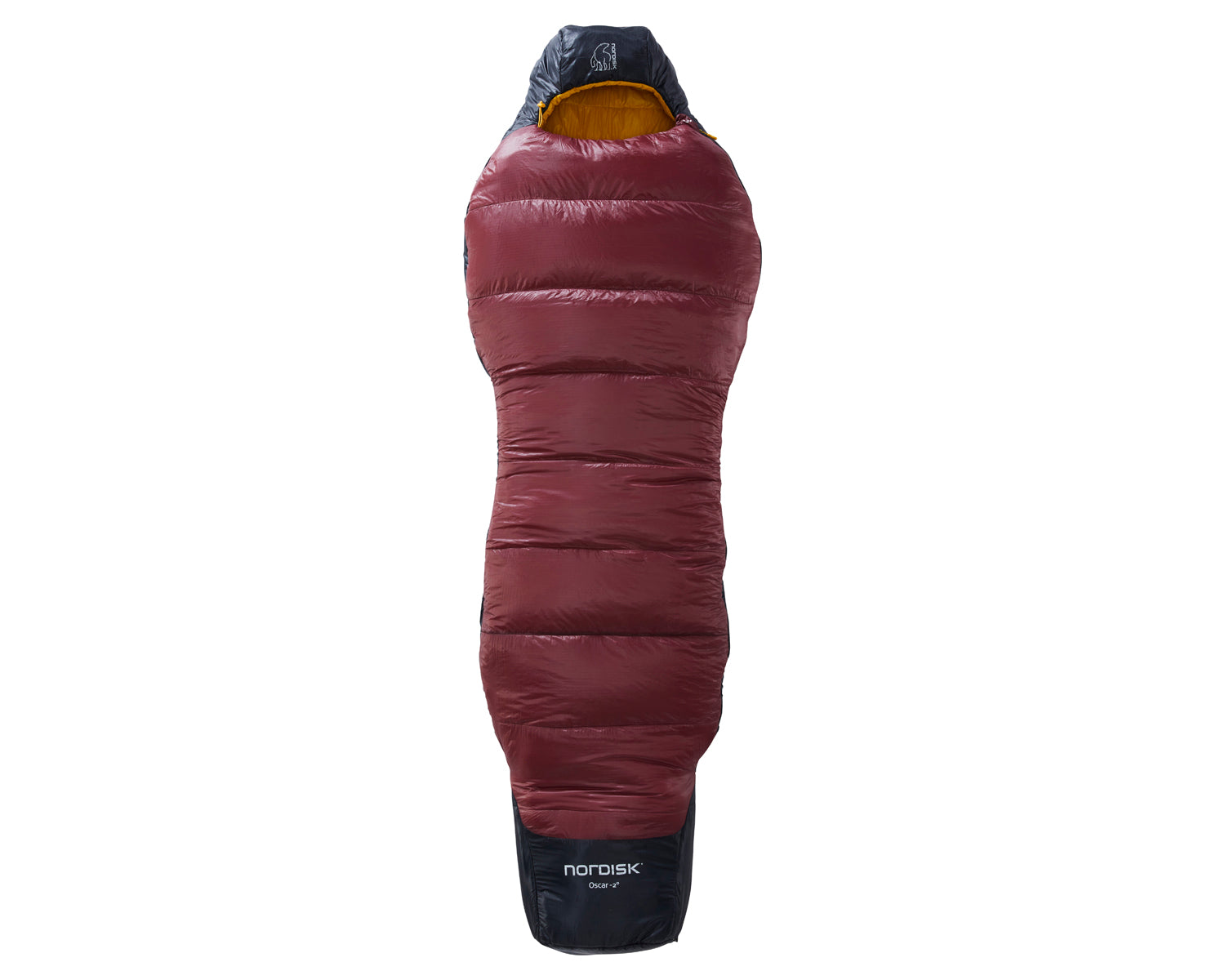
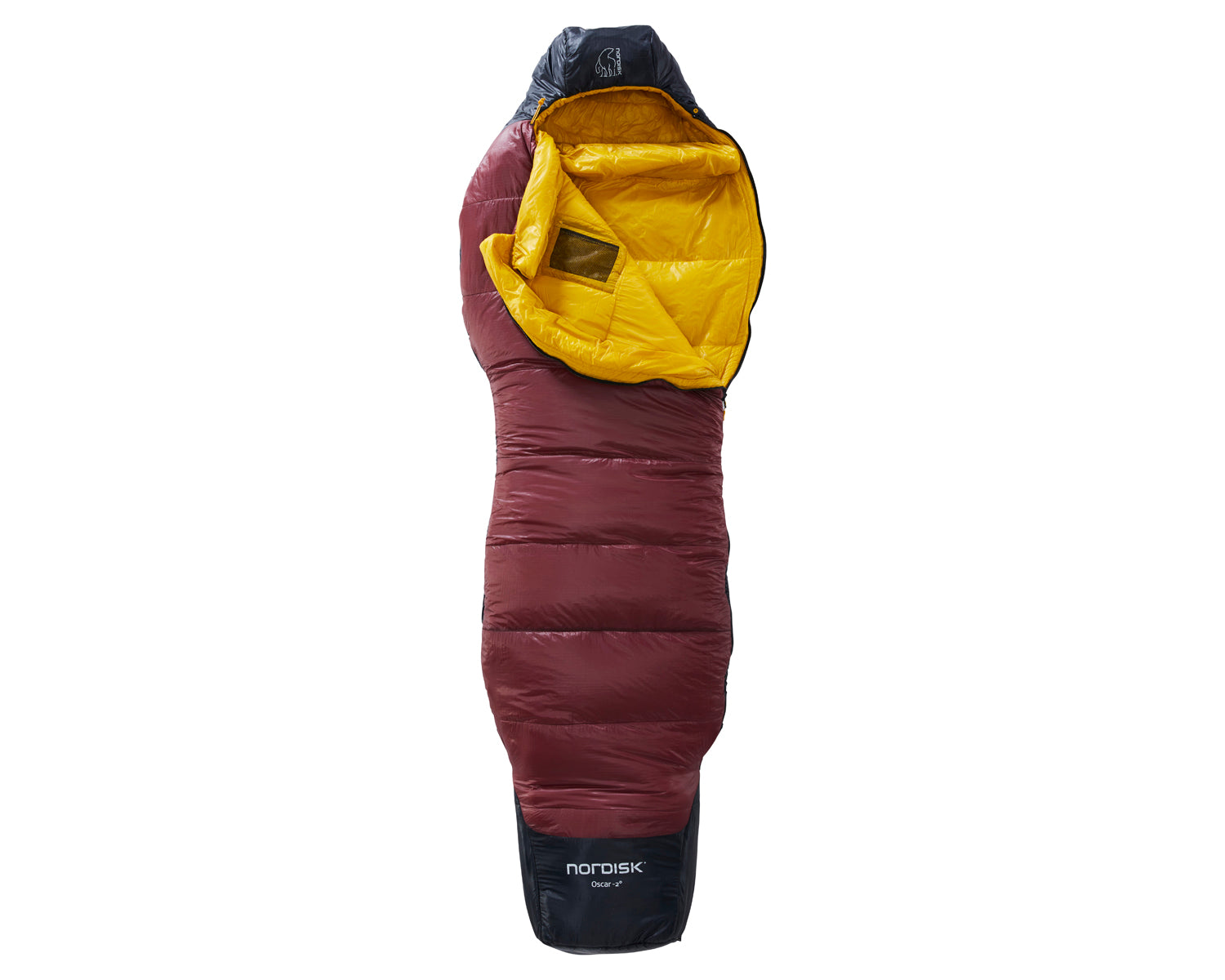


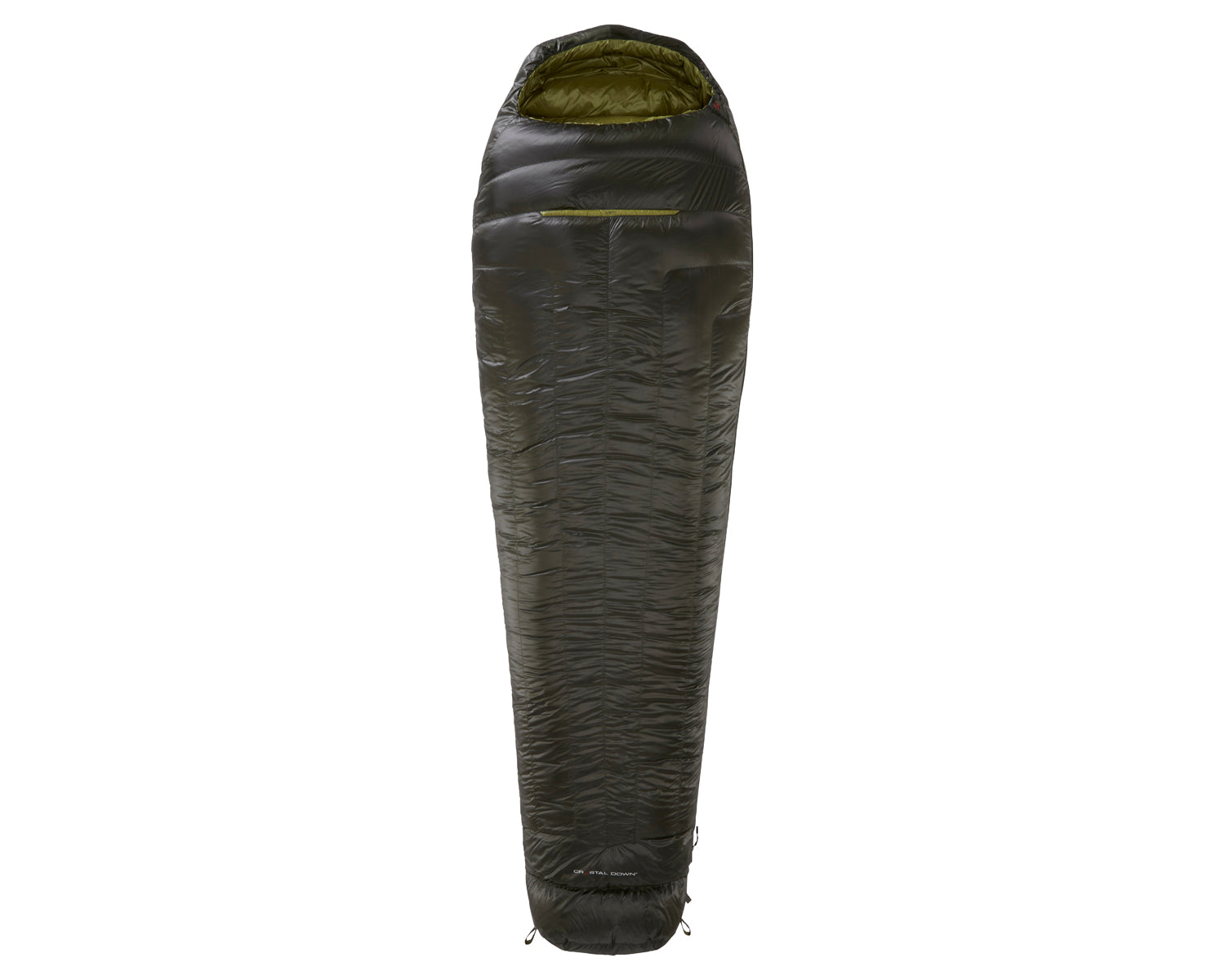
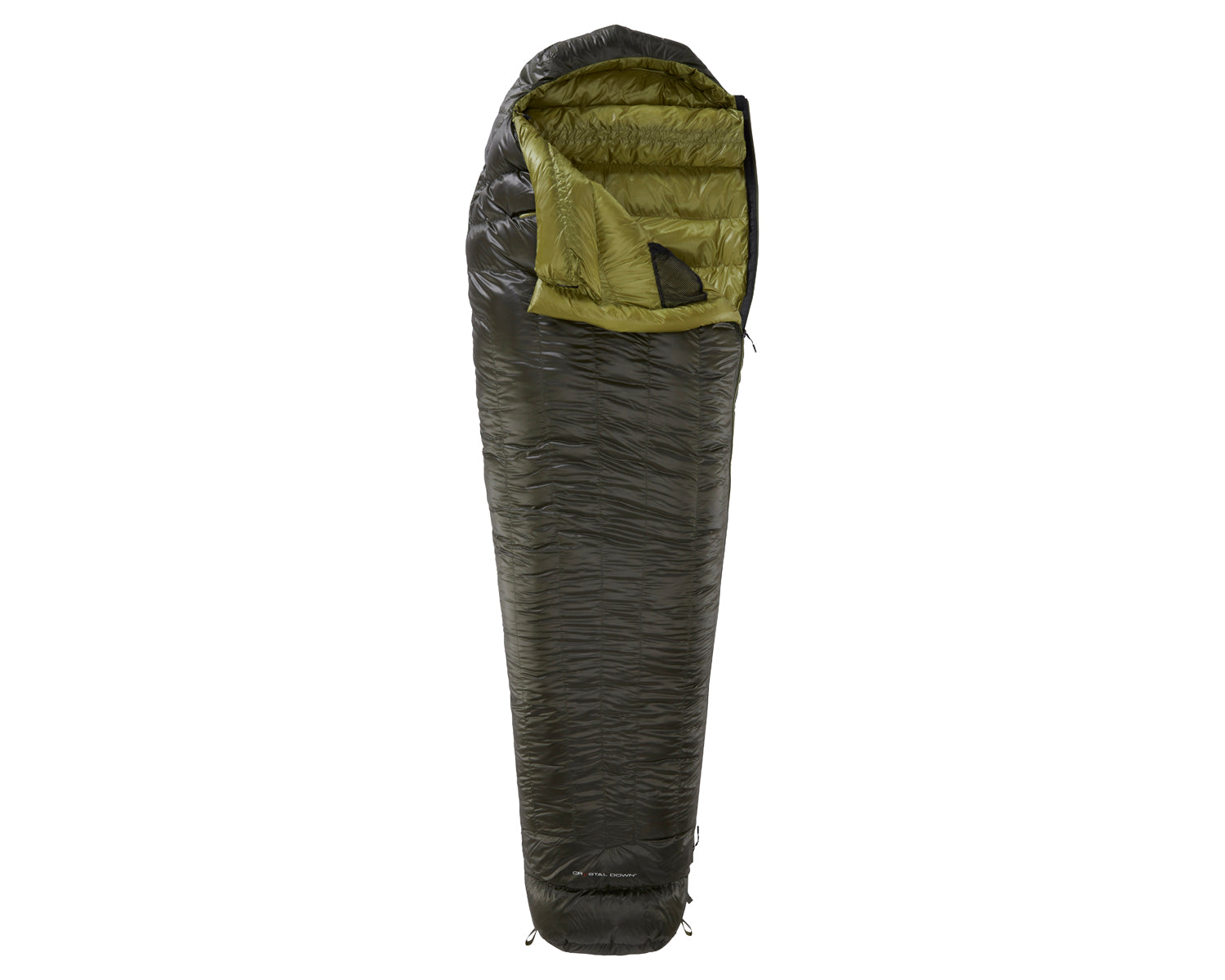
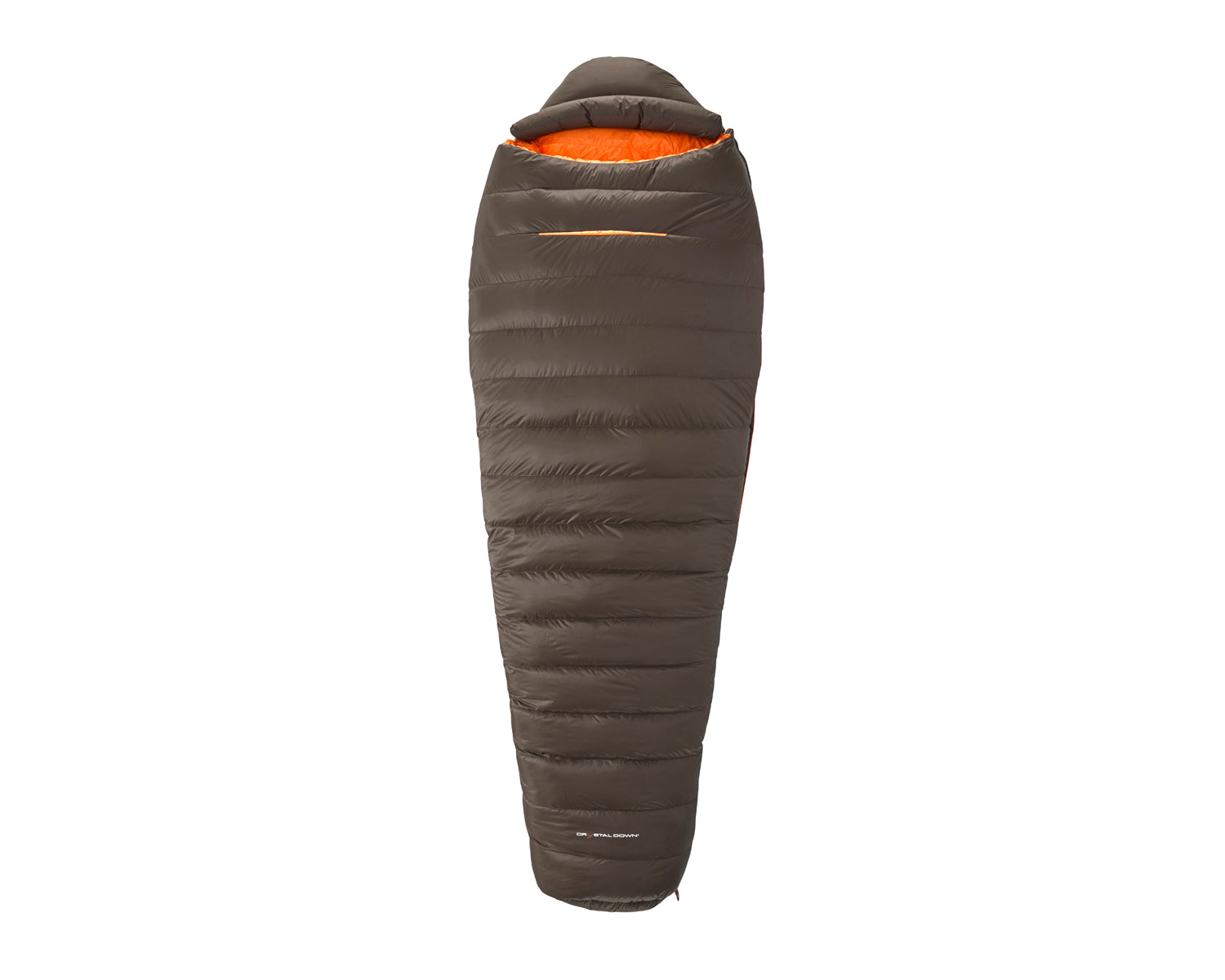
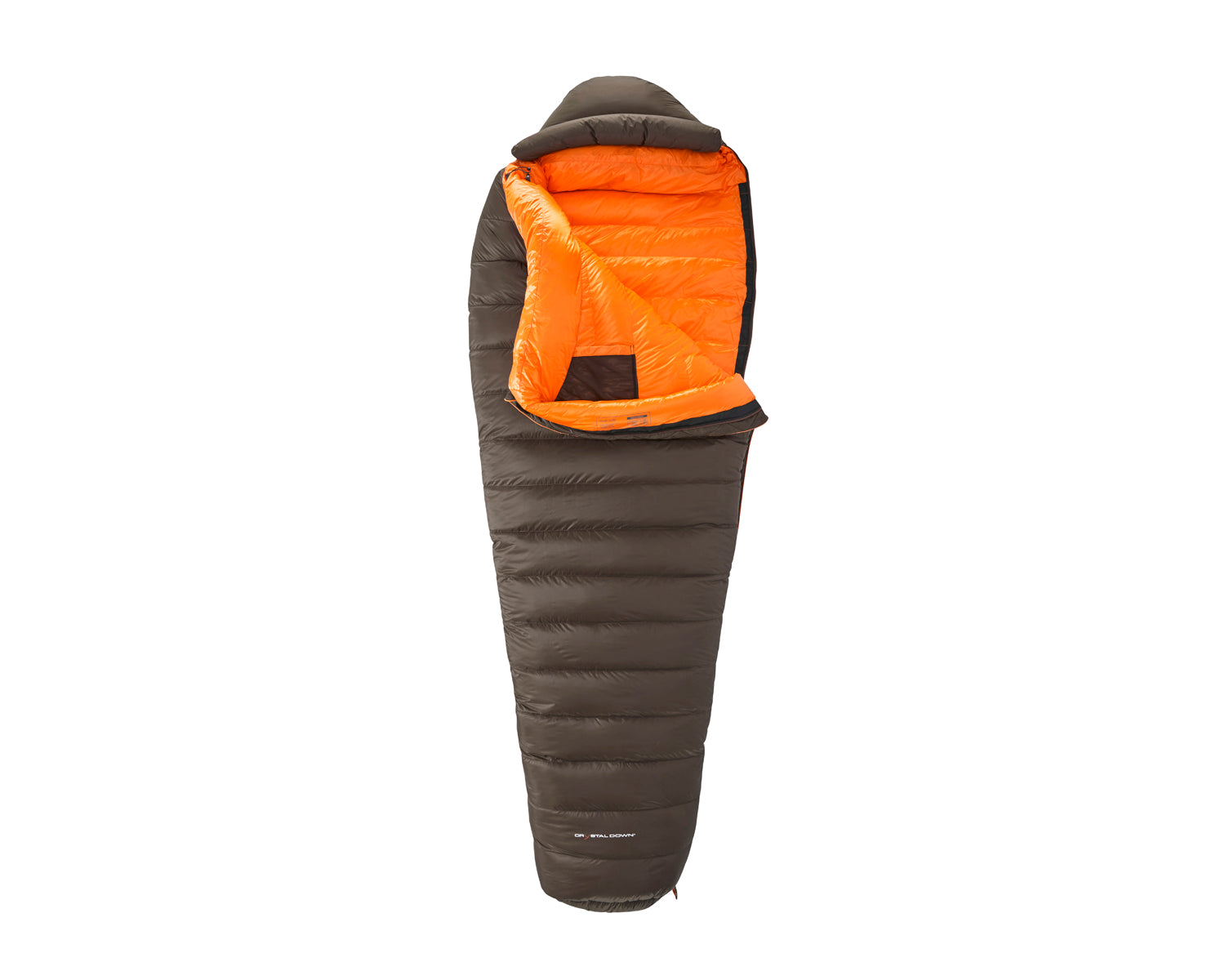


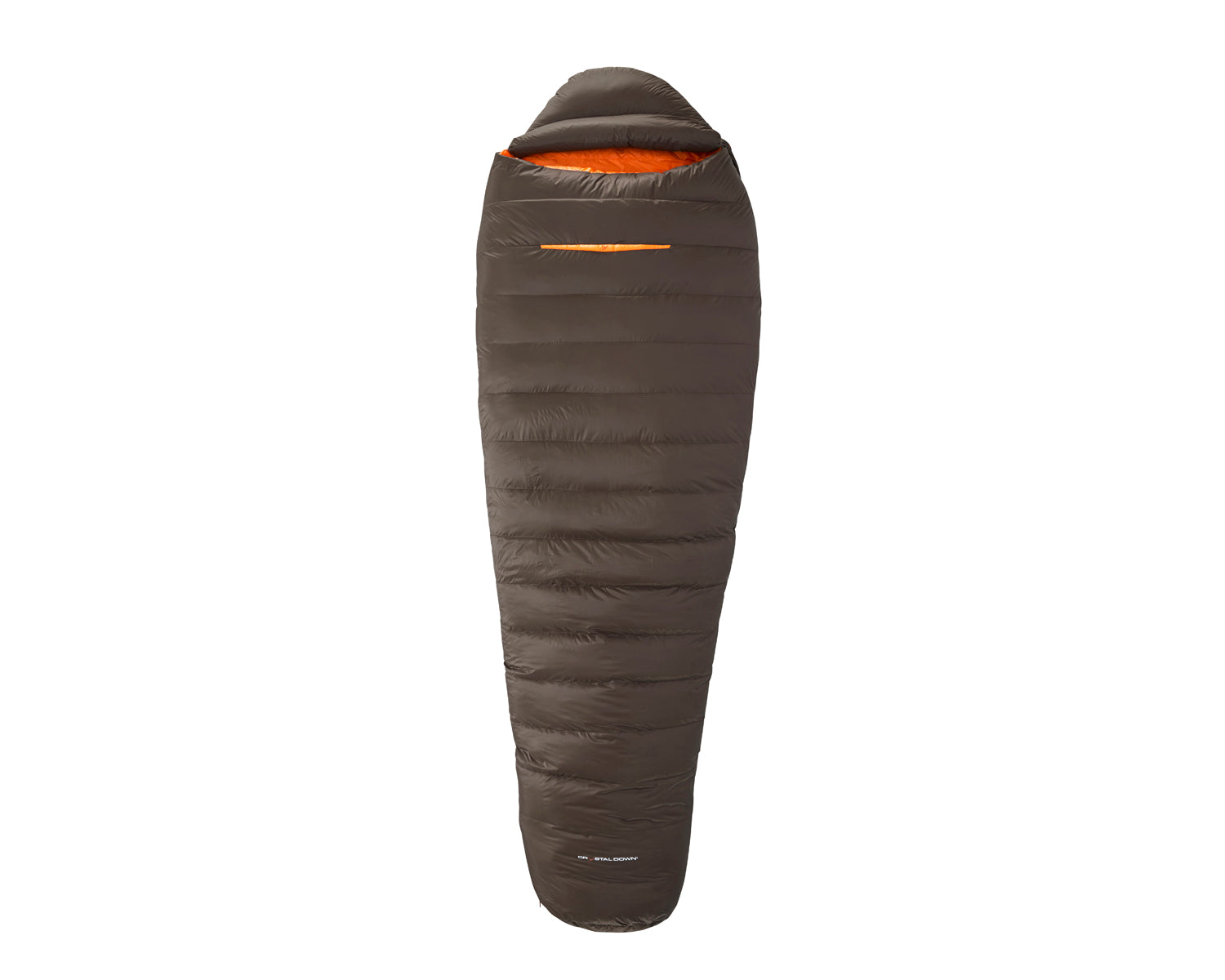
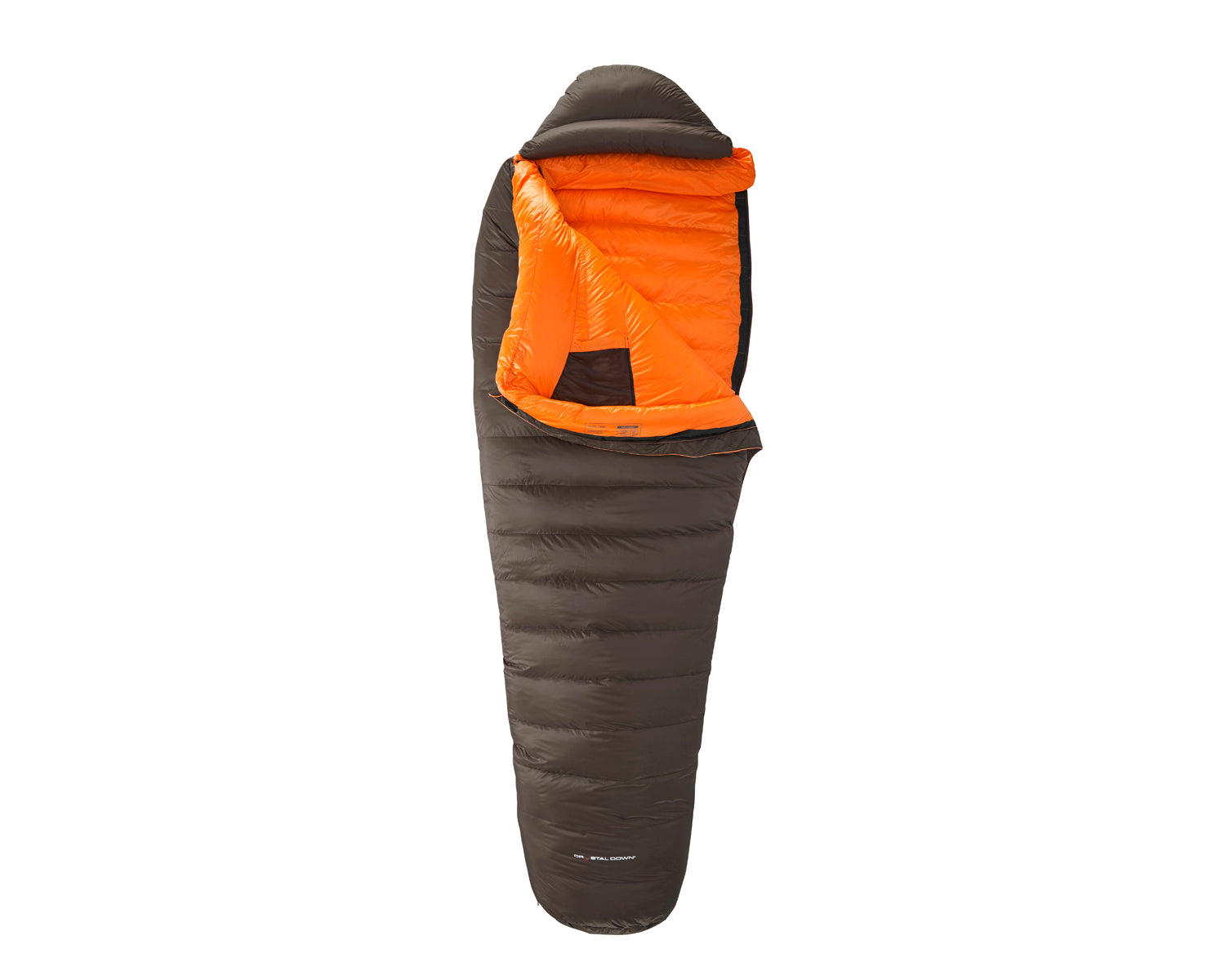
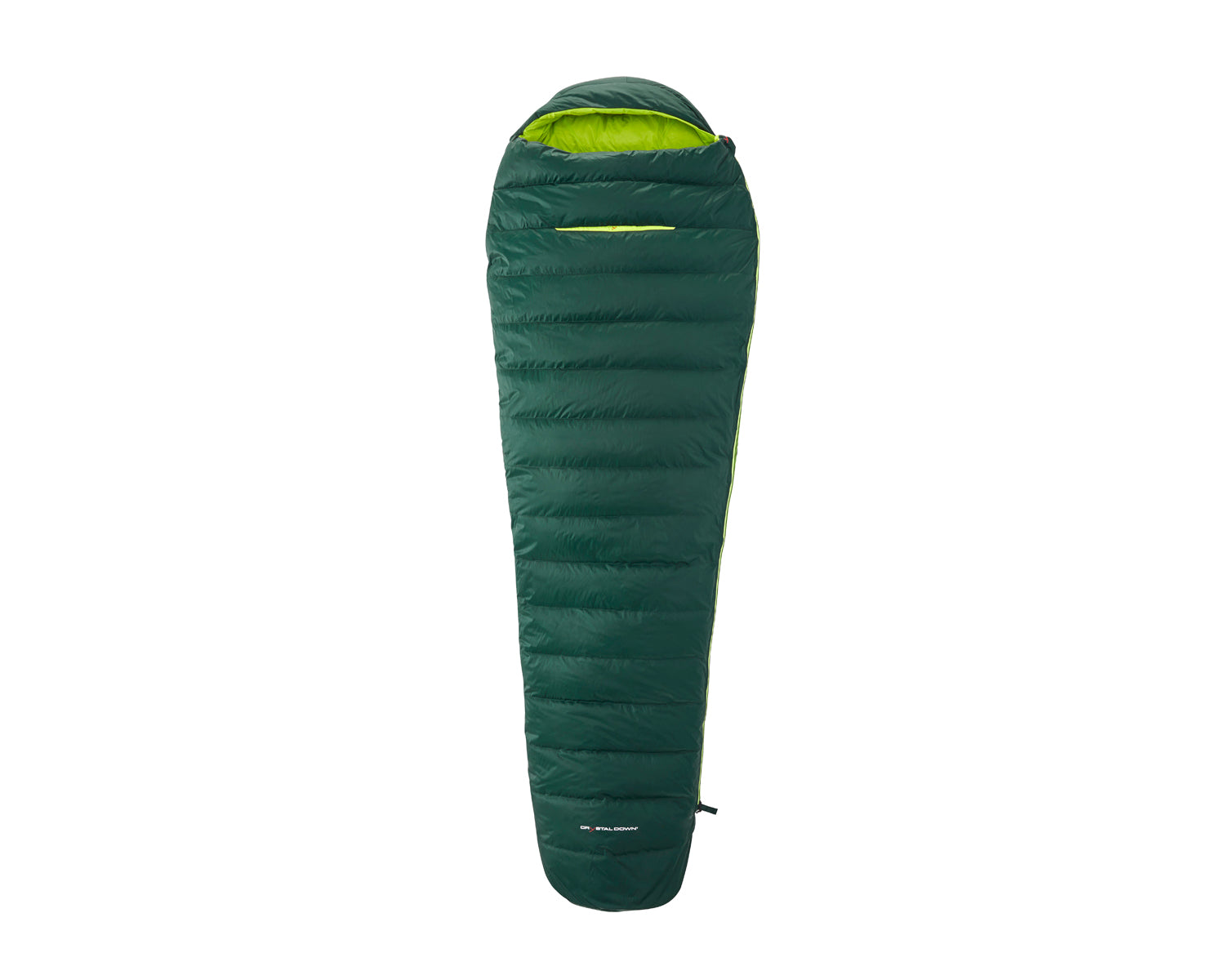
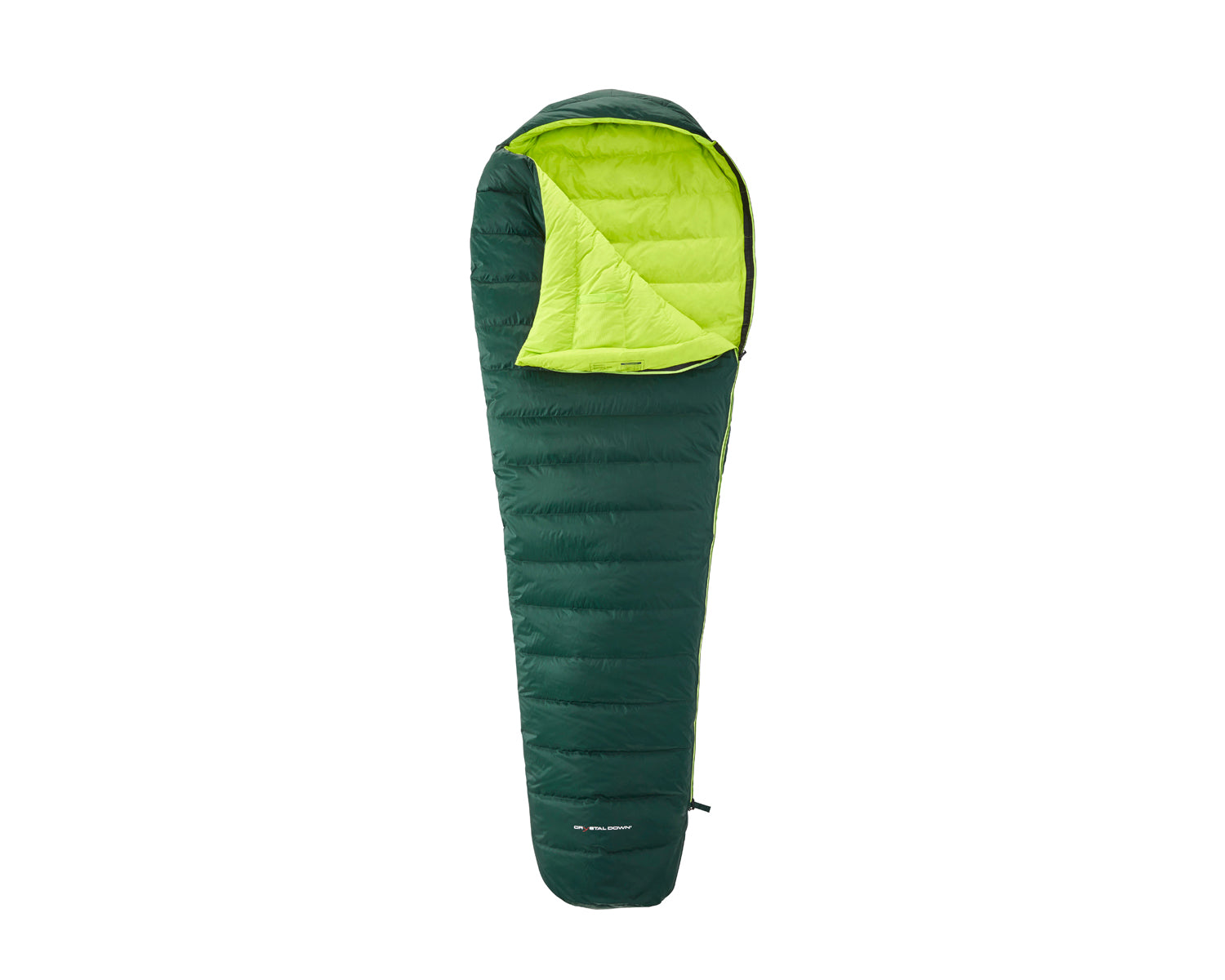
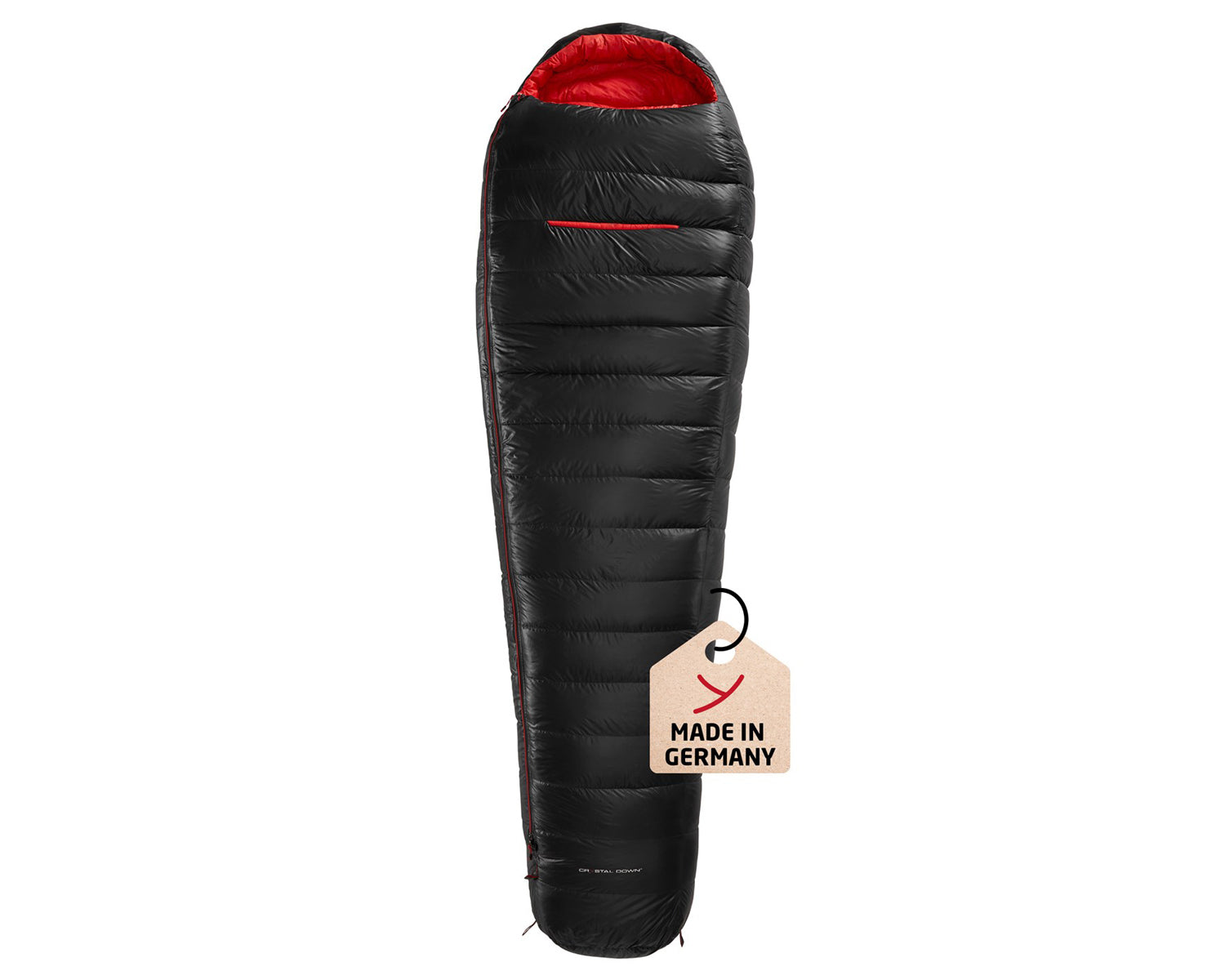
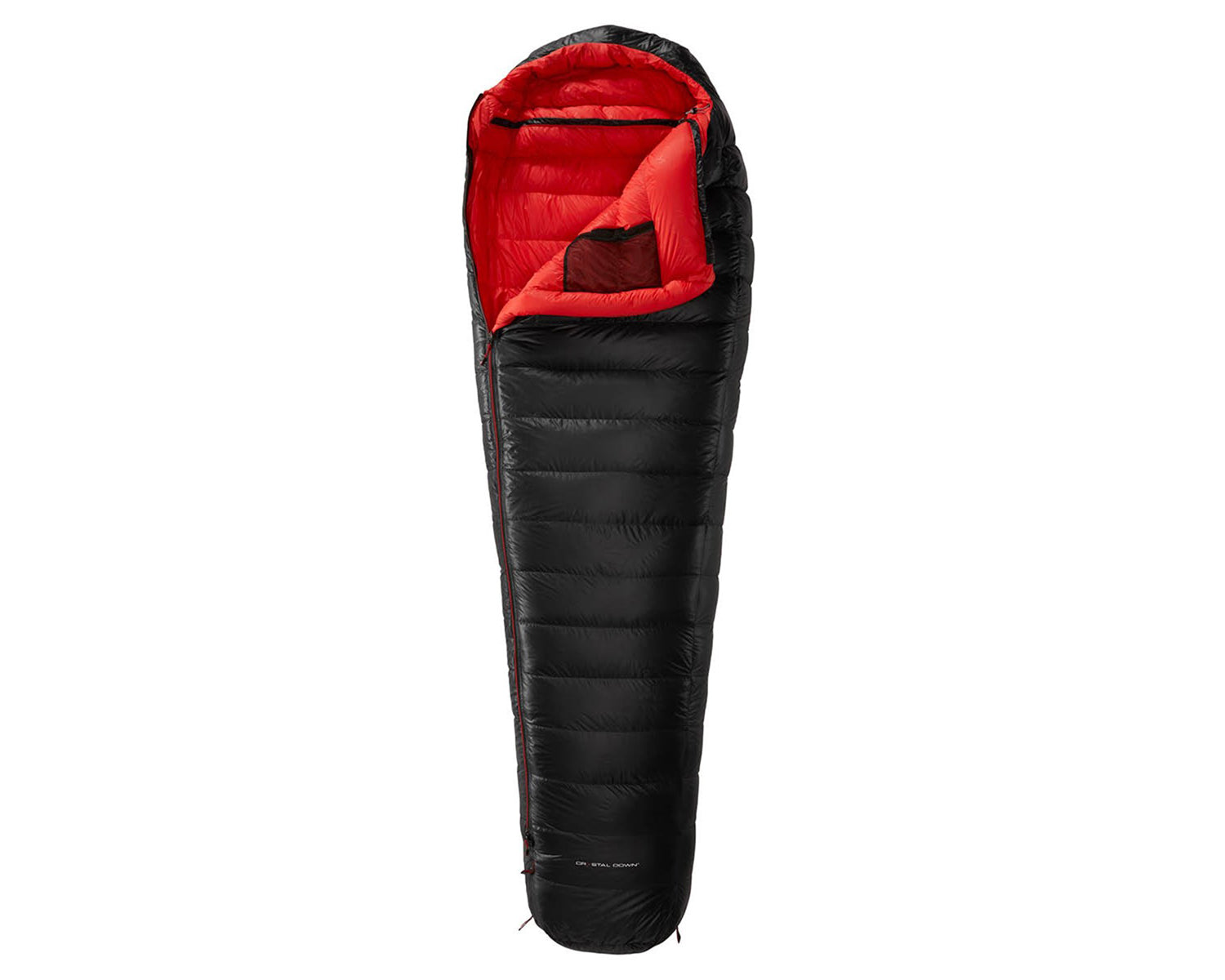


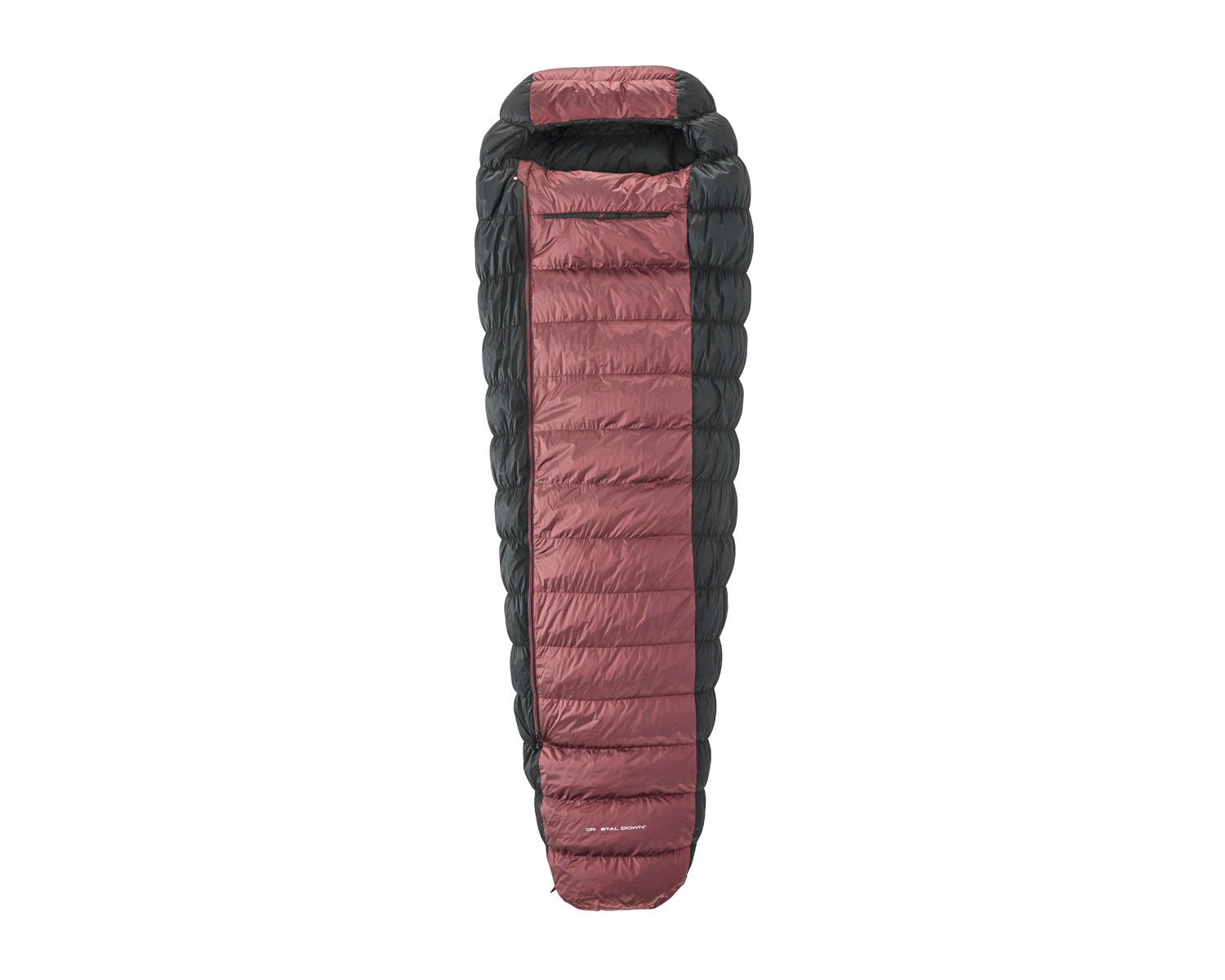
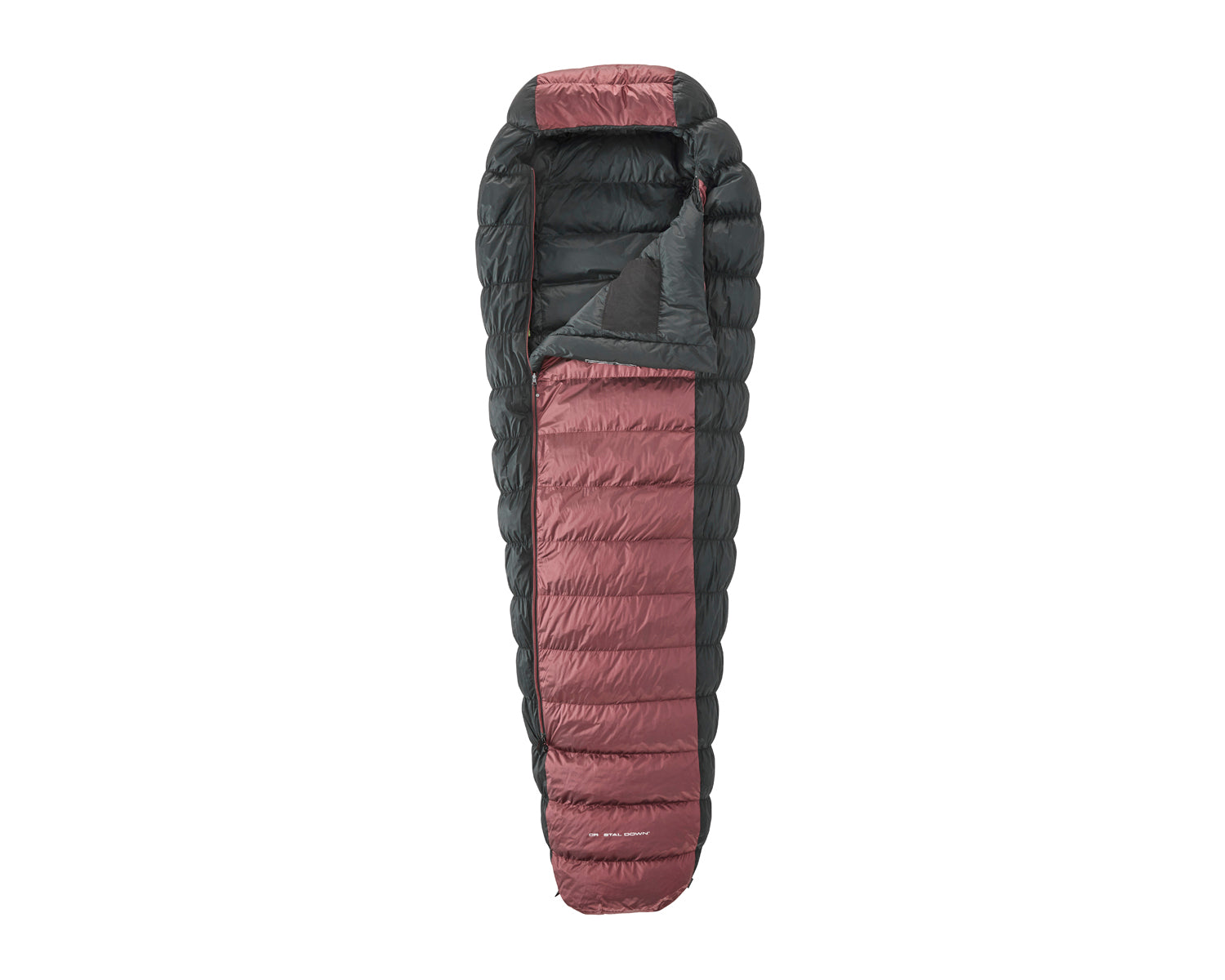
A sleeping bag does not generate heat — it holds on to the warmth you bring into it. The insulation, whether down or synthetic, traps your body heat and blocks the cold from outside. If you get in cold, the bag stays cold until your body warms it up. Layering up too much does not help — it can actually block heat circulation inside the bag.
One point that is often overlooked: a sleeping bag alone does not guarantee a good night's sleep. You need a sleeping pad underneath to insulate you from the ground. Without it, even the warmest bag will struggle. The pad is your thermal barrier from below — it is non-negotiable.
All Nordisk sleeping bags are tested according to the ISO 23537 standard, giving you a reliable and comparable assessment of how a bag performs in different conditions.
Comfort temperature
The lowest temperature at which a person with average cold sensitivity can sleep comfortably. The ISO test uses a female standard sleeper as reference. This is your primary number if you tend to get cold easily or want an undisturbed night. Note that physical exhaustion and low energy intake will increase your sensitivity to cold.
Limit temperature
The lowest temperature at which a trained and healthy adult can sleep through the night without waking from the cold. The ISO test uses a male standard sleeper as reference. If you know your limits, this is your performance benchmark. At Nordisk, the temperature stated in the product name is based on this ISO 23537 limit temperature. In some cases, the measured limit temperature may be lower than the stated name — never higher. This means certain bags offer slightly more warmth than the name suggests.
Extreme temperature
The outermost limit of the sleeping bag's protective capability. At this temperature, the bag may help prevent life-threatening hypothermia — but cold sensations and early symptoms can still occur. This is an emergency survival threshold, not a planned overnight temperature.
A note on individual differences
Temperature comfort is personal. Humidity, wind, physical condition, energy levels and what you wear to bed all play a role. Use the ratings as guidance, not as a guarantee.
Summer sleeping bag
Lightweight, breathable and built for warm nights. For hiking, bikepacking and the trips where the sleeping bag should not take up more space than it needs to.
3-season sleeping bag
The versatile choice from early spring to late autumn — warm enough for the cool nights, breathable enough for the mild ones. The smart choice for the active outdoor user who does not want a different bag for every weather condition.
Winter sleeping bag
Built for the nights when insulation, construction and materials are not a question of comfort — but of a good night's sleep. For winter campaigns, high-altitude trips and Arctic conditions.
Mummy
Close-fitting anatomical cut with minimal air volume. Maximum thermal efficiency for cold conditions and weight-conscious trips.
Wide Mummy
Nordisk's preferred cut for most users. More freedom of movement than a classic mummy — without compromising warmth.
Blanket
Classic rectangular shape with full freedom of movement. Best for car camping and the trips where flexibility matters more than weight.
The right size matters. Too short means cold feet. Too long means wasted warmth heating empty air volume.
All Nordisk sleeping bags feature a left-side zipper. Blanket styles can be zipped together with other bags, as can most Mummy and Wide Mummy styles. Note: when two hooded bags are zipped together, one hood will end up in front of the face — not under the head. Flip it inward or outward to adjust.
Complete Zip
Opens the bag fully. Ideal for ventilation or blanket-style use.
Side Zip
Partial opening down to the ankle area with a closed footbox for better heat retention.
Half Zip
Minimalist design for ultralight packing and maximum thermal efficiency.
Selected models feature shoulder zippers for improved fit and heat retention, and footbox zippers for ventilation on warmer nights.
Down is lighter, more compressible and delivers the best warmth-to-weight ratio — but loses insulating performance when wet. Synthetic fibre retains its thermal properties in damp conditions, dries quickly and requires minimal care. That makes synthetic sleeping bags the preferred choice for kayaking, rainy forest trips and any trip where you cannot guarantee keeping the bag dry.
Shake out the bag before use to restore loft. Warm your body up before getting in — your body needs to heat the bag, not the other way around. Air the bag out in the morning to release moisture. Store it loosely at home to preserve the insulation's volume. Wear a hat in cold conditions if you sleep with the hood open or without a hood — it is where warmth escapes fastest. Avoid gloves and socks unless absolutely necessary — your core heat distributes naturally through the bag. Wool underwear is the best choice for sleeping: temperature-regulating, moisture-wicking and comfortable year-round.

Sign up for our newsletter and be among the first to receive news, stories, and much more.